
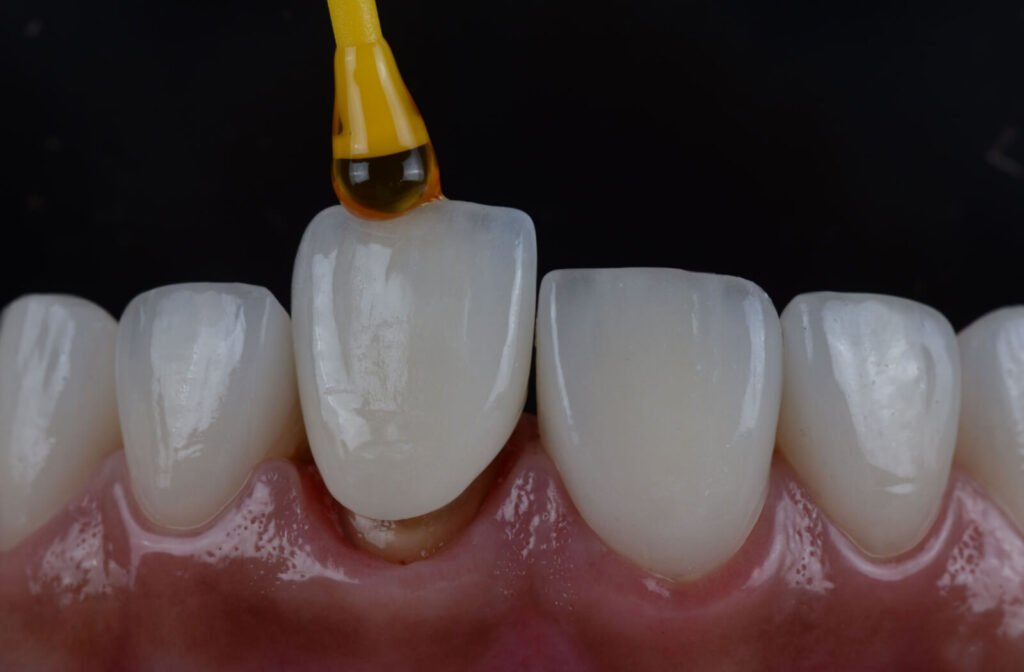
Dental Crowns
Dental Crowns
Dental crowns are custom-made restorations that cover damaged, decayed, or weakened teeth to restore strength, function, and aesthetics. At AbuMaizar Dental Center, we use advanced materials and precision techniques to create durable, natural-looking crowns tailored to your smile. Crowns are an essential part of fixed prosthodontics, which focuses on permanently attached dental restorations to replace missing tooth structure.
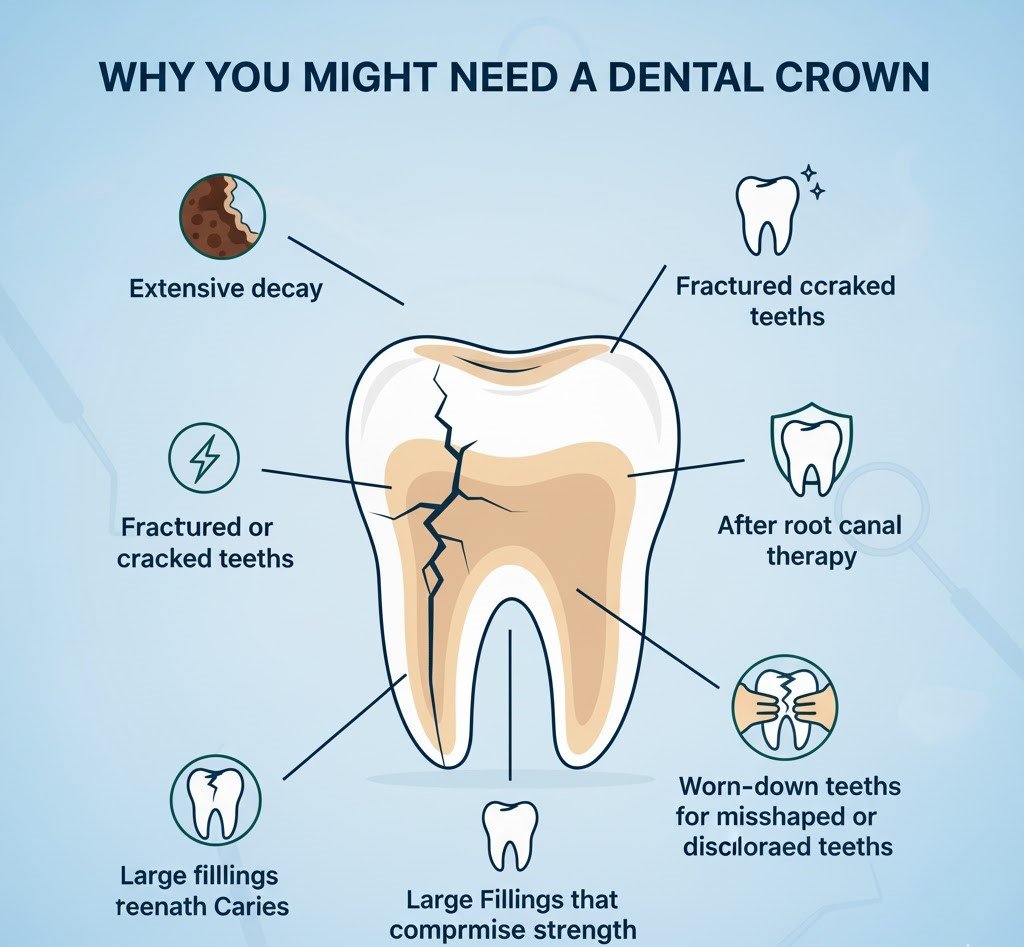
Why You Might Need Dental Crowns
- Extensive decay that cannot be restored with fillings
- Fractured or cracked teeth
- After root canal therapy to protect the remaining tooth
- Worn-down teeth due to grinding (bruxism)
- Cosmetic enhancement for misshaped or discolored teeth
- Large fillings that compromise tooth strength
5 Types of Dental Crowns Compared
Choosing between the different types of dental crowns depends on the tooth’s location, your bite, and your aesthetic goals. The table below compares the five main materials we offer:
| Crown Type | Material | Advantages | Disadvantages | Longevity | Ideal Use |
|---|---|---|---|---|---|
| Metal (Gold/Alloy) | Gold or metal alloy | Extremely durable, strong bite, biocompatible | Metallic appearance, not aesthetic | 20–30 years | Posterior teeth, high bite pressure |
| Porcelain-Fused-to-Metal (PFM) | Porcelain + metal | Durable + aesthetic, natural color | Porcelain may chip, metal margin may show | 10–15 years | Front and back teeth where strength + aesthetics needed |
| All-Ceramic / All-Porcelain | Porcelain or zirconia | Highly aesthetic, stain-resistant, biocompatible | Less fracture-resistant than metal | 10–20 years | Front teeth or visible areas, cosmetic cases |
| Zirconia | Zirconium oxide | Extremely strong, aesthetic, biocompatible | Can be abrasive to opposing teeth | 15–25 years | Posterior teeth, high durability and aesthetics |
| E-Max / Lithium Disilicate | Glass-ceramic | Excellent aesthetics, translucent, strong | Requires precise bonding | 10–15 years | Single anterior crowns, smile enhancement |
Dental Crowns Procedure: Step by Step
- Examination and Treatment Planning: Visual and radiographic evaluation, assessment of tooth structure, occlusion, and adjacent teeth, plus a discussion of crown material options.
- Tooth Preparation: Local anesthesia, the tooth is reshaped to create space, and any decay or old restoration is removed.
- Impression / Digital Scan: Traditional putty impression or intraoral digital scan for accurate crown fabrication.
- Temporary Crown: Protects the tooth while the permanent crown is fabricated and maintains bite and aesthetics.
- Crown Fabrication: Lab or in-office CAD/CAM milling; material choice depends on tooth location and patient preference.
- Crown Cementation: The temporary crown is removed, the permanent crown is tried in for fit, shape, and color, then cemented with dental adhesive.
- Final Adjustments: The bite is checked and polishing ensures smooth margins and aesthetics.
Benefits of Dental Crowns
According to the American Dental Association, crowns are one of the most reliable ways to restore a compromised tooth. Well-made dental crowns:
- Protect and strengthen weak teeth
- Restore chewing and speaking function
- Improve smile aesthetics
- Provide a long-lasting solution for damaged or decayed teeth
- Prevent further tooth loss or complications
Aftercare for Dental Crowns
- Avoid chewing very hard foods for 24 hours after cementation
- Maintain daily brushing and flossing
- Avoid sticky or excessively hard foods for long-term durability
- Report any discomfort, looseness, or sensitivity promptly
- Schedule regular dental checkups
Potential Complications
- Sensitivity to hot or cold (usually temporary)
- Marginal leakage or crown dislodgement (rare)
- Fracture of the porcelain layer (PFM or ceramic crowns)
- Wear on opposing teeth (zirconia crowns may be abrasive)
Dental Crowns FAQ
🦷 Are dental crowns painful?
No. Local anesthesia ensures comfort during the procedure. Some mild sensitivity may occur for a few days afterwards.
⏱ How long does crown placement take?
Typically 2 visits: preparation and impression at the first visit, then final cementation 1–2 weeks later.
🧬 How long do dental crowns last?
Most crowns last 10–20 years with proper oral hygiene. Zirconia and metal crowns can last even longer.
🪥 Can crowns break?
Rarely — especially the porcelain layers on PFM crowns. Avoid biting very hard objects to protect your restoration.
👨⚕️ Meet Your Expert Trusted care from a certified specialist.