

When you visit the dentist, you are likely familiar with standard X-rays. However, modern dentistry has taken a giant leap forward with a technology known as Dental CBCT scan.
If your dentist has recommended a Dental CBCT scan, you might be wondering what it is, how it differs from a standard X-ray, and why it is necessary for your treatment. This guide breaks down everything you need to know about this advanced dentist imaging technology.
What is a Dental CBCT scan?
CBCT stands for Cone Beam Computed Tomography. It is a specialized type of X-ray equipment used when regular dental or facial X-rays are not sufficient.
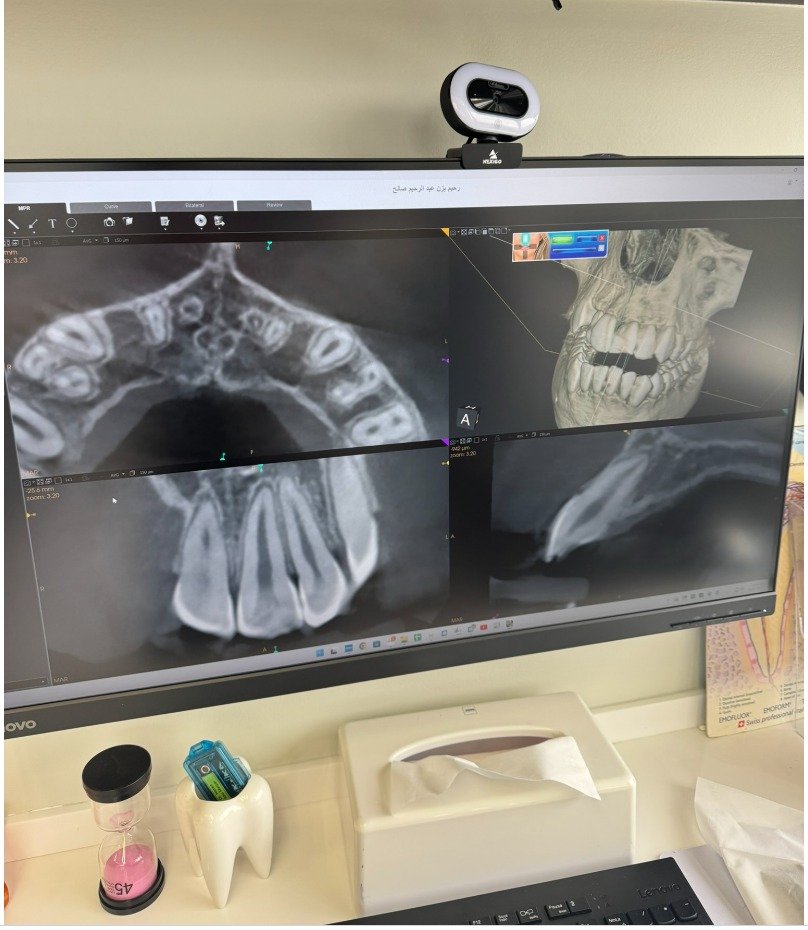
Unlike traditional 2D X-rays (which result in a flat image) or standard medical CT scans (which use fan-shaped beams), this technology uses a cone-shaped X-ray beam. The scanner rotates around your head to capture data that is reconstructed into a high-definition 3D dental imaging model.
This 3D view allows your dentist to see:
- Teeth and roots
- Soft tissues and nerve pathways
- Jawbone structure and density
- Airways and sinuses
CBCT vs. Traditional X-Rays: What’s the Difference?
While traditional digital X-rays are excellent for detecting cavities, they have limitations because they flatten 3-dimensional structures onto a 2-dimensional plane.
Dental CBCT overcomes this by providing a comprehensive, 360-degree view. This allows for a much higher accuracy in diagnosis, ensuring that your treatment plan is based on the exact anatomy of your mouth, rather than an estimation.
6 Key Uses of Cone Beam CT in Dentistry
Because of its precision, dental CBCT is used across various dental specialties. Here are the six most common applications:
1. Orthodontics (Braces and Aligners)
Orthodontists use 3D imaging to visualize the exact position of teeth within the jawbone. This is crucial for planning tooth movement and assessing impacted teeth (teeth stuck in the bone) before starting treatment.
2. Dental Implants
This is perhaps the most critical use of Cone Beam CT. Before placing an implant, the dentist must know the exact quantity and quality of the bone. CBCT allows for precise surgical planning, ensuring the implant is placed safely away from nerves and sinuses.
3. Tumor and Cyst Detection
The detailed imagery helps oral surgeons discover, measure, and evaluate tumors or cysts in the jaw and facial region that might be invisible on standard X-rays.
4. Endodontics (Root Canal Therapy)
In complex root canal cases, 3D dental imaging helps endodontists see the intricate shape of root canals. It helps identify hidden canals, cracks, or infections in the surrounding tissues that traditional X-rays might miss.
5. Diagnosing Fractures and Deformities
In cases of trauma, CBCT is used to assess hairline fractures in the roots or jawbone. It is also essential for diagnosing structural deformities in the jaw.
6. Oral and Maxillofacial Surgery
For patients requiring reconstructive jaw surgery, CBCT provides the detailed roadmap surgeons need to plan the procedure with high precision.
Why Is This Technology So Important?
The importance of Dental CBCT cannot be overstated. By moving from 2D to 3D, your dentist gains a complete understanding of your oral health. This leads to:
- Accurate Diagnosis: No more guesswork regarding bone depth or nerve location.
- Better Treatment Outcomes: Precise planning leads to higher success rates in surgeries and implants.
- Safety: By mapping out nerves and sinuses, the risk of complications during surgery is significantly reduced.
How Much Does a Dental CBCT Scan Cost?
The cost of a Dental CBCT scan can vary significantly depending on several factors, including:
- The geographical location of the clinic.
- The specific type of equipment used.
- The field of view (whether scanning one tooth or the whole jaw).
- Your insurance coverage.
Estimated Pricing: In general, the price for a CBCT scan typically ranges between 25 to 50 JOD (Jordanian Dinar). [Note: Prices vary globally; please consult your local provider for rates in your specific currency].
Why would a dentist order a CBCT scan?
A dentist may order a CBCT scan when a standard dental X-ray does not provide enough detail. A CBCT scan creates a detailed 3D image of your teeth, jaw, nerves, and surrounding structures, helping with accurate diagnosis and treatment planning for dental implants, root canals, impacted teeth, orthodontics, jaw fractures, cysts, tumors, and oral surgery.
How much does a dental CBCT scan cost?
The cost of a dental CBCT scan varies depending on the clinic, the area being scanned, and your location. In Jordan, a CBCT scan typically costs 25–50 JOD. Prices may differ in other countries, so it’s best to check with your dental provider for an accurate estimate.
What are the disadvantages of CBCT scan?
While CBCT is highly accurate, it has a few limitations. It exposes patients to more radiation than a standard dental X-ray (though generally less than a medical CT scan), may not be necessary for routine dental examinations, can be more expensive, and is less effective at imaging soft tissues than a conventional medical CT or MRI.
👨⚕️ Meet Your Expert Trusted care from a certified specialist.